It’s Not Too Late to Feel Better.
Even After Years of Unresolved Neurological Symptoms.
Our personalized NeuroRescue Programs use a detailed neurological evaluation and targeted rehabilitation designed to help improve balance, thinking and movement, so you can get back to living your best life.
Is This Your Reality?
You’ve tried medications, therapies and seeing provider after provider, and you’re still looking for answers.
You still struggle with dizziness, headaches, brain fog, balance problems, fatigue, movement problems or trouble thinking clearly.
We focus on helping people like you look for ways to improve function and quality of life.
Conditions We Treat
We evaluate and treat a wide range of neurological conditions. Your care starts with a detailed neurological exam and objective neurodiagnostic testing, using the same types of tools found in hospital balance clinics and published neuroscience research. These help us find patterns in how your nervous system is working, measure where function is limited, and build a rehabilitation plan made for you.
Our goal is to help you improve how your nervous system functions and get back to more of the activities that matter most to you.
-
Still not feeling like yourself after a head injury? You’re not alone.
Concussions and brain injuries can leave you with symptoms that last for years. You may deal with headaches, dizziness, brain fog, or trouble with balance and memory. Bright lights and busy places may feel overwhelming, and your emotions may be harder to manage. Many people try provider after provider and still don’t have clear answers.
If that sounds familiar, it’s not in your head, and it’s not your fault.
Your care starts with a detailed neurological exam. Our testing includes videonystagmography (VNG), the video head impulse test (vHIT) and CAPS computerized posturography. These are the same types of tools used in hospital balance clinics and in published neuroscience research. Together, they measure your visual, vestibular, motor and other neurological functions that can be affected by a concussion or brain injury, and help us see which systems are involved in your case.
From there, we build your personal NeuroRescue Program, designed to improve how you function day to day and reduce the impact of lingering symptoms. Our goal is to help you think more clearly, feel steadier, and get back to more of the life you want. We work alongside your other providers to make sure you get the care you need.
-
When your body won’t move the way you want it to, we’re here to help.
Living with a movement disorder can be one of the most frustrating experiences there is. Your body may not do what you ask it to. Simple things like walking, writing or getting dressed can take effort and focus. Over time, you may feel like you’re losing the freedom to move through the world on your own terms.
You deserve care that looks at the whole picture.
Movement disorders can involve several areas of the brain, such as the basal ganglia, the cerebellum, the frontal motor cortex and the parietal sensory cortex. Your care starts with a detailed neurological exam, along with objective testing of your balance, coordination and eye movements. These help us understand how the networks involved in your movement, posture and coordination are working.
From there, we build your personal NeuroRescue Program, designed to support those networks and help you function as well as possible day to day. Some movement disorders are caused by neurodegenerative diseases, such as Parkinson’s disease, which have no known cure. For every patient, our focus is on improving function and quality of life, not curing disease. Our goal is to help you move with more control and confidence and stay active in the parts of life that matter most to you. Our care doesn’t replace medical treatment. It adds to it, working alongside your neurologist and other providers to give you another strong layer of support.
-
When dizziness, vertigo or poor balance take over your life, we’re here to help.
Dizziness and vertigo can affect every part of your life. When you can’t trust your sense of where you are, the world starts to feel unsafe. You may avoid driving, crowds or even leaving the house because you never know when the next episode will hit. For some people, it gets so bad they spend days in bed, missing out on work, family and the things they love.
You don’t have to keep living on edge.
Your care starts with a detailed exam of your balance and eye-movement systems. Our testing includes videonystagmography (VNG), the video head impulse test (vHIT) and CAPS computerized posturography. These are the same types of tools used in hospital balance clinics and in published neuroscience research. They help us find what may be contributing to your dizziness, vertigo and balance problems.
From there, we build your personal NeuroRescue Program, designed to improve how these systems work and reduce your symptoms. Our goal is to help you feel steadier, move with more confidence, and get back to more of the life you want. We work alongside your other providers to make sure you get the care you need.
-
We provide personalized care to help your autonomic nervous system find its balance again.
Living with dysautonomia can be exhausting. You may feel dizzy or lightheaded, as if you’re about to pass out. Your heart may race for no clear reason. Your balance may feel unsteady, your thinking may be foggy, and the pain may never fully go away. On hard days, even simple tasks can feel impossible.
You’re not imagining it, and you don’t have to figure it out alone.
Dysautonomia has many possible causes. In many of the patients we see, part of the problem involves how the inner ear’s balance system and the brainstem work together to help control blood flow to the brain. When these systems don’t communicate well, symptoms can follow.
Your care starts with a detailed neurological exam. This includes objective testing of your visual, vestibular and balance function. We also measure your heart rate and blood pressure in different positions, including on a tilt table. These tests help us understand which systems are involved in your case. From there, we build your personal NeuroRescue Program, designed to help those systems work better together.
Your therapy may include targeted visual, balance and movement exercises and gentle electrical stimulation, applied through the skin, to activate specific parts of your autonomic nervous system.
Our goal is to help you feel steadier, think more clearly, and get back to more of the things you love. We work alongside your other providers, because dysautonomia often needs a team approach.

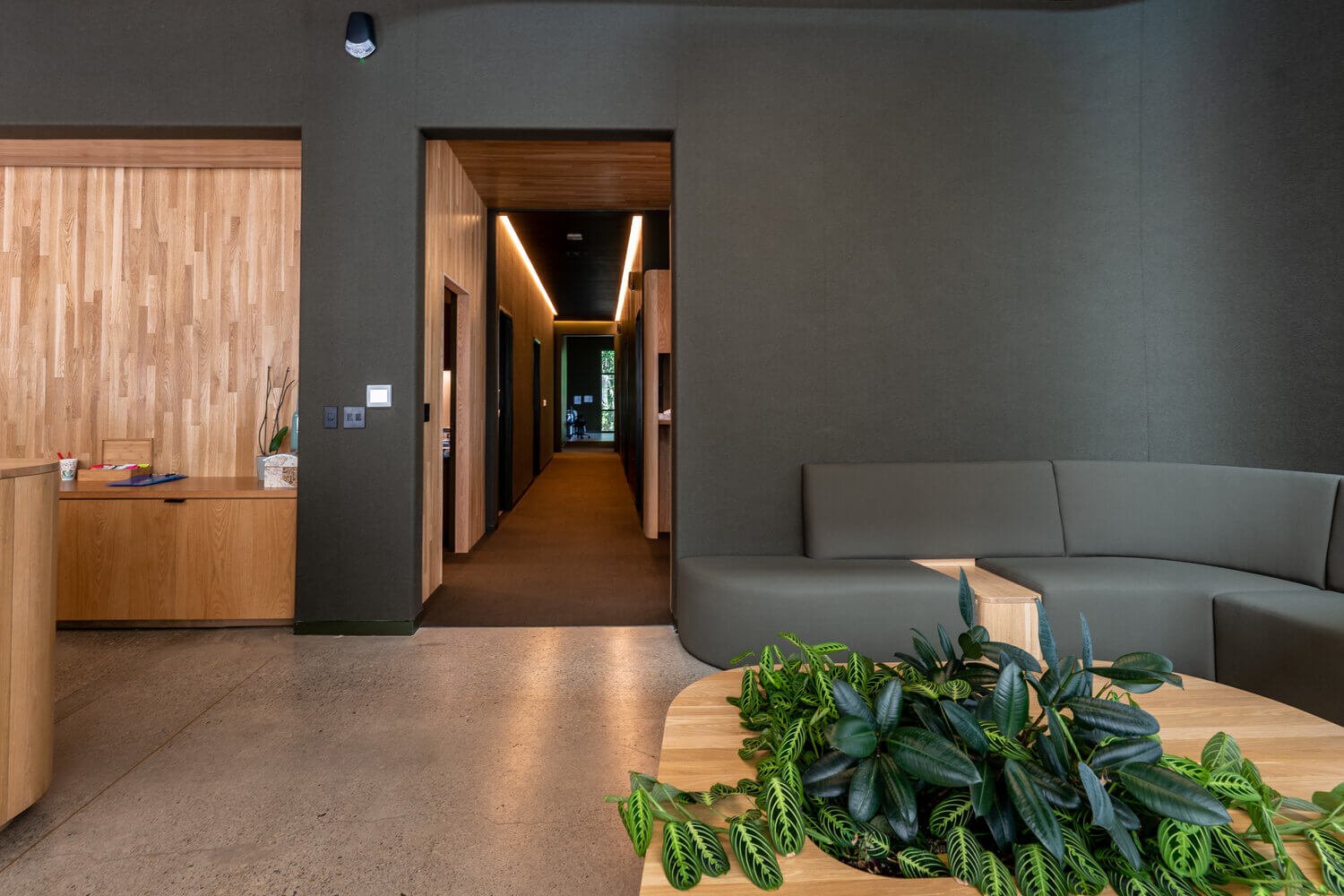
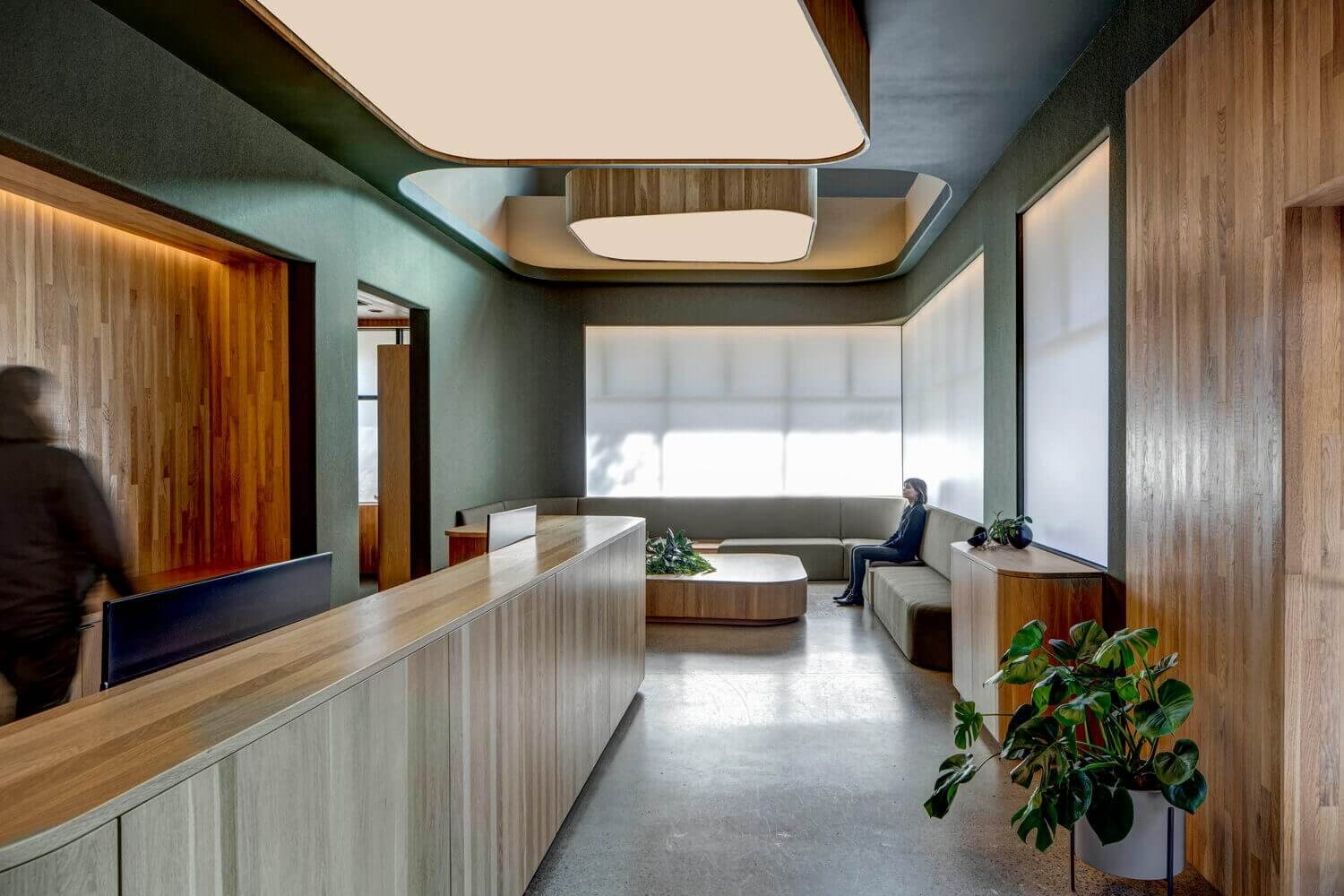
A space designed with your nervous system in mind
For many people with neurological conditions, ordinary places can be overwhelming. Harsh lighting, echoing rooms and busy surroundings can trigger symptoms before therapy even begins. That’s why our clinic was designed to reduce those triggers, so you can feel calmer, more comfortable and better able to focus on your care.
Every detail, from the shape and color of our walls to our lighting and sound-absorbing surfaces, was chosen with neuroscience research in mind. The result is a calm, safe space for people who struggle with sensory overload and other neurological challenges.
Our facility has been recognized as a premier healing environment in North America by the international design and architecture communities.
We were named the Best Small Healthcare Facility of 2022, the highest award from the International Interior Design Association.
We also were the recipient of the Honor Award of 2022, the highest distinction from the American Institute of Architecture.
Step One: Discovery Day
-
In-depth testing to understand how your nervous system is working
Your NeuroRescue Program begins with your Discovery Day, a 3-hour exam focused entirely on you. We take time to learn about your challenges, how they started, and how they affect your daily life. Then we complete a detailed neurological exam and objective neurodiagnostic testing to get a clear picture of how your systems are working.
By the end, we’ll have the information we need to design a plan built around your needs and goals, and to start you on the path toward feeling more like yourself again.
-
Your health history, in depth
We take the time to go through your health history from the very beginning, laying out your life on a timeline. This helps us understand what may have contributed to your problem, what has and hasn’t helped so far, and whether other factors, such as genetic, metabolic, immune or psychological ones, may be playing a role. When something falls outside our care, we’ll help connect you with the right provider.
This detailed history gives us the insight we need to start designing a NeuroRescue Program that fits you.
-
A thorough exam, at your pace
Your symptoms are pieces of a puzzle, and we look at every one of them closely. We take the time we need, without rushing, to get a clear picture of what’s going on and the best next steps for you.
Our exam looks closely at how your nervous system is working. It helps us understand what may be contributing to your symptoms, how it may have started, and how it’s affecting your daily life. From there, we can start you on the path toward feeling better.
-
Objective testing, measured in detail
We use the same types of neurodiagnostic tools found in hospital balance clinics and published neuroscience research, including videonystagmography (VNG), the video head impulse test (vHIT) and CAPS computerized posturography. Every patient receives at least 44 separate instrumented tests, giving us objective data on how your key neurological systems are working.
These tests show us how your pathways and systems function, how well they work together, and when they begin to fatigue. The results guide the design of your personal NeuroRescue Program, with each part aimed at improving how those systems work.

You Don’t Have To Keep Living Like This.
Get a clearer picture of what’s going on. Your Discovery Day is the first step toward a plan built around you.

Step Two: Your Program
-
Care programs designed around you
We build each treatment program around the results of your exam and testing. At Northwest Functional Neurology, we offer two types of programs: NeuroRescue Intensive and NeuroRescue Outpatient. Both are designed around your unique circumstances and functional challenges, with the goal of helping you get back to more of the life you want.
-
Our NeuroRescue Intensive Program packs about two months of outpatient care into one to two weeks. Think of it as a boot camp for your brain.
We usually work with you up to five times a day for five days in a row, with breaks built in so you can rest between sessions. We repeat a full set of diagnostic tests several times during the week and adjust your program based on how you respond. This lets us fine-tune your care in real time, instead of waiting weeks between adjustments.
The Intensive can be a good fit if you want focused, concentrated care in a short time. It’s also why many of our patients travel to us from across the country and around the world.
-
NeuroRescue Outpatient Program
In our Outpatient Program, we design a 60-day care plan built around you. You come in for treatment three times a week. Between visits, you follow a custom home exercise program to keep your brain engaged and build on the work we do in the clinic.
We adjust your program along the way based on how you respond. After a few weeks, we repeat your diagnostic testing to see what has changed and what still needs work, and we update your plan to match. This way, your care keeps evolving as you do.
The Outpatient Program can be a good fit if you live nearby or prefer to spread your care out over time.
Real People. Real Recovery.
Step Three: Hear From Our Patients
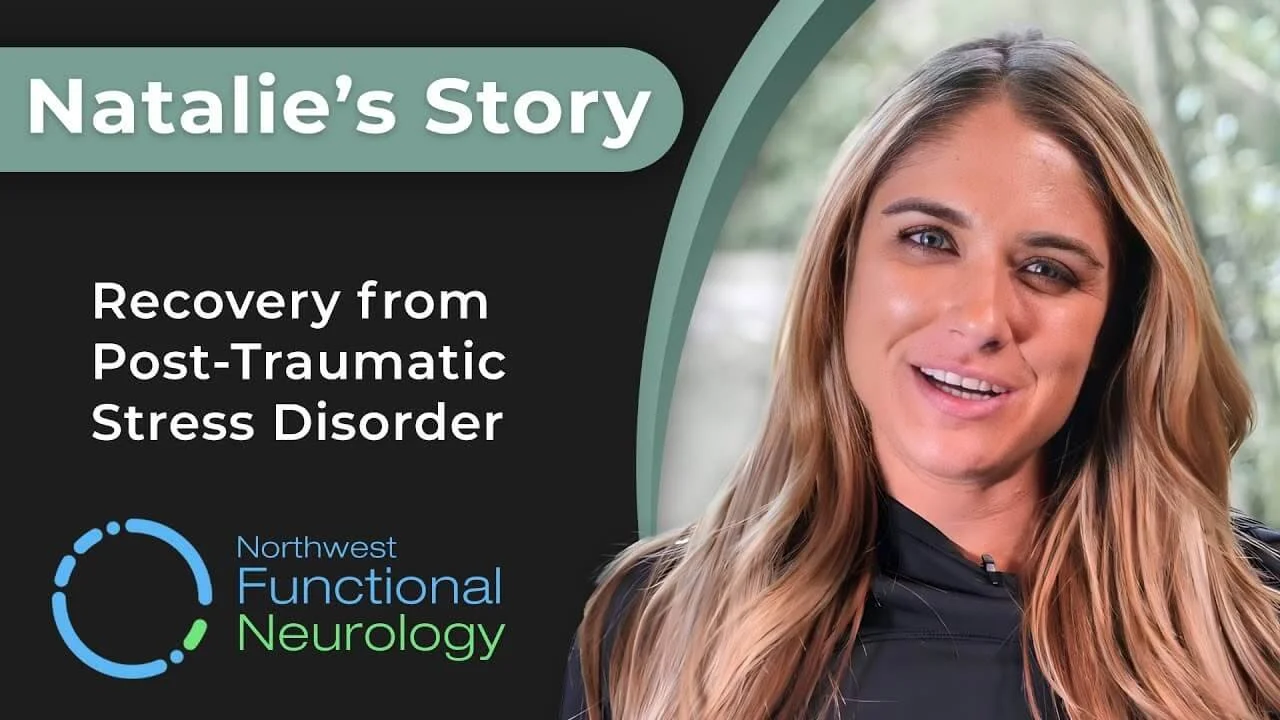
Natalie came to us from Scottsdale, AZ, for treatment of Post-Traumatic Stress Disorder. We were honored to be able to assist in her recovery. Click the video to the right to watch her story.